Tuesday, 15 December 2015

Have a career in electronics

There is a recent widespread belief that electronics engineering pass-outs and others pursuing electrical studies are losing demands in the job market. Is that so?

We aim to discuss the scope for people involved in studying electronics in terms of career prospects.
Have a career in electronics

What is electrical engineering about?

The field of electronic engineering deals with non-linear electronic components like, semi-conductors, electron tubes, integrated circuits, diodes, transistors, and other electrical components to build an electrical circuit which will form a part of a machinery system that can take care of certain mechanical or electrical functions. This can also be used to create passive electrical devices that are based on printed electric boards.

Electronics engineering field is a mother subject that encompasses several specific subjects like, analog electronics, digital electronics, power electronics, embedded electronic systems, consumer electronics and much more. This is one field that includes the implementation of principles, applications and algorithms that are related to various allied fields.

Career prospects for students with training in electronics and communications:

 The telecom industry is currently growing at a fast rate. As per the current statistics, the telecom industry accrues over 9 million new subscribers every month. Thus, it is safe to say that this creates a pretty large space for engineers with an electronics or telecommunications degree. Moreover, there is always the IT sector to look to, both hardware as well as software.

Currently, the nation is emerging to be one of hubs in the field of Embedded Systems or VLSI. The starting package for a quality engineer even at entry level positions could be around USD 6000.00 at the topmost MNCs around the world.

In fact the communications, media and entertainment industry is the biggest employer of electrical personnel around the world. A few big names amongst the leaders in the hiring industry are corporate biggies like Vodafone, Star network etc.

Some leading industries hiring B.Techs and others trained in electronics are:
  • Software engineering firms/IT
  • Telecommunications
  • Power sector
  • Television industry
  • Hardware manufacturing
  • Television industry 
  • Home appliance, VLSI design
  • Research and development

The job description in these fields mainly involves roles like setting up networks, maintaining electronic gears and other systems, setting up equipments. The list of biggest employers also includes names like IBM the corporate hardware giant, and other communications industry biggies like Siemens and Nokia also take up people skilled in electronics studies.

Related News


Tuesday, 17 November 2015

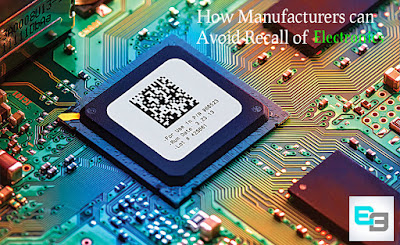
How Manufacturers can Avoid Recall of Electronics

The ability to trace components of electronic instruments has assumed more significance than ever before and the trend is all set to continue. The end in mind is to curtail costs and liability due to recall and counter diversion and counterfeiting while continuing to maintain the brand’s integrity. This can be achieved by efficiently and effectively putting into use what is termed as data marking tech while manufacturing electronic components.

free electronics videos

Traceability Remains a Growing Need

When warranty claims related to recalls and defects are made, in ideal conditions the manufacturer would be to identify the origins of the parts to the specific process or machine. This may be attained through judicious and proper use of hardware and software. The task of the software in this particular matter is to come up with codes that are traceable whereas the hardware like cameras and printers are able to produce and authenticate the code involved.

An Upcoming Threat

The industry dealing with electronics is being challenged increasingly with electronics components that are actually counterfeits. In a recent article, the “Semiconductor Industry Association” revealed that electronic components counterfeiting costs the semiconductor industry by as much as $7.5 billion every year in terms of the loss in revenue. The unique coding method when applied on components and parts is exactly what the industry needed to provide necessary protection.

How to Put in Place a Traceability System

With the evolution of technology manufactures face the considerable hurdle on marking unique codes on components that are getting smaller by the day. In the absence of any single particular standard, some of the manufacturers are often required to mark specific codes by customers down in the buying stream.

The conundrum facing manufacturers of electronic components is how to implement a system of traceability that meets their unique and individual needs amidst a scenario of coding demand that is highly challenging.

The Options

Two marking and printing technologies exist that are well suited to meet such coding demands:


  • Laser marking systems
  • Continuous inkjet printers
Endwords

The latest breed of CIJ and laser printers may easily print in outstanding resolutions and prints of high durability and print in small spaces generate all sorts of complex codes; providing a solution to the problem of implementing traceability systems. online electronics training will get you all the know how needed to understand the basics of electronics and comprehend the issues dealt with in this post all the more.

Related News


Tuesday, 6 October 2015

Top 5 Technologies for Sustainable Development

In the present years, during the advent of Electronics training, the exact technologies to make improvement sustainable are accessible. In this connection the major challenge is to make connections between the general population with the thoughts, those taking a shot at the ground with the local information on how it may function and the investors to support them.

 Top 5 Technologies for Sustainable Development

Here, I am going to incorporate some inventive, fresh technologies which are the leaps forward in pushing new limits.

Algae Biofuels

12% of flight fuel could originate from green growth by 2030, if monetary reductions don’t mediate. In 2009, the primary green growth fuelled car was put out and about. Green growth fuel, a fluid seeming to be like vegetable oil, discharges the carbon’s fifth outflows of fossil fuels and could be prepared in proficient seaside lakes.

Zinc-air Batteries

With world assets of zinc being 100 times more ample than lithium particle, a shift to zinc-air batteries can possibly make computers more versatile, electric automobile more reasonable and portable amplifiers more solid. Zinc is ecological, moderately cheap and great source of energy.

Natural Solar Cells

As per UK’s Carbon Trust, inexpensive natural sunlight based cells can be made sufficiently effective to prevail business achievement. But, expectations have been disillusioned repetitively as makers are yet to get above 9% change from light to power. However, in the event that leaps forward happen, a considerable lot of us will begin wearing sun based apparel, conveying sun powered umbrellas and utilizing versatile sunlight based chargers.

Sea Energy

The US, UK, Norway and Canada are in front for creating tidal energy and ocean wave assets, however, expenses are still generally twofold what is financially suitable. A scope of development is being produced, especially in the more progressed and less exorbitant region of tidal forces. The Carbon Trust appraises that 20% of UK power needs could be met by the ocean from the 2020s.

Smart Lighting

Smart lighting is an affluent range of technology with several little associations, growing better approaches to supply poor nations with sun oriented lamps, or, on the flip side of the range, to give inhabitance sensors and sunlight delicate schemes for industrial units. Lights that monitor biochemical perils or which can give web access are in the pipeline.

Presently, it is vital that we move this talk without hesitation and start to allocate the basic technologies that will enhance lives far and wide.

 Related News


Wednesday, 30 September 2015

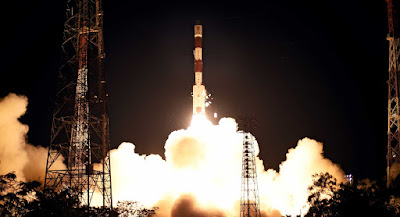
Isro Launched First Satellite Astrosat

Isro, on Monday, effectively propelled first astronomy satellite of India, Astrosat - after 11 years the legislature cleared the task. 

Isro Launched Its First Astronomy Satellite Astrosat

At 10am, Astrosat, conveyed by a Polar Satellite Launch Vehicle (PSLV-C30) and six different satellites detonated from the Satish Dhawan Space Center in Sriharikota.

After liftoff, in around 25 minutes, PSLV-C30 infused Astrosat and different satellites, which include four nanosatellites of the US, an Indonesian microsatellite and a Canadian nanosatellite - into their separate courses. For the first time India is propelling a US satellite.

644.651km from earth Astrosat was put on a course, as wanted. The satellite accomplished a normal slant of 6.002 degrees.

P Kunhikrishnan, the director of Satish Dhawan Space Center, said after the dispatch, that the mission is fruitful. It is an all around perceived and synchronous endeavor. For him it was a well deserved blessing.

About Astrosat:

Astrosat, having a takeoff accumulation of 1,513kg, now will set out on a five-year cosmic operation concentrating on inaccessible divine articles.

It will monitor the universe in the bright, ocular, high and low energy x-beam areas of the electromagnetic range, contrasted with nearly all other exploratory satellites that are fit for watching a wavelength band’s restricted scope.

In the middle of its assignments, Astrosat’s 5 payloads will learn black-holes and star conception locales.

The website of ISRO records out the observatory’s target - to see high vitality forms in twofold star frameworks containing black-holes and neutron stars; to gauge magnetic grounds of neutron stars; to read star conception areas and lofty energy forms in star frameworks lying past the galaxy; to identify new sources for temporarily brilliant x-beam in the sky and finally to execute constrained profound ground-overview of the ultraviolet locale of the universe.


Astrosat, conveying 5 payloads, is equipped for watching the sky in the perceptible, close UV and far UV areas of the electromagnetic range.

There are two telescopes on the Ultraviolet Imaging Telescope (UVIT) payload, which are intended to accomplish a magnificent picture determination, whereas the other 4 payloads have their particular parts.

Alternate payloads are – Soft x-beam Telescope (SXT), Large X-Ray Proportional Counter (LAXPC), Charge Particle Monitor (CPM) and Cadmium Zinc Telluride Imager (CZTI).

On next Monday, the payloads will begin taking a shot, on the eighth day after dispatch.

 Related News

http://www.techtimes.com/articles/54828/20150522/scientists-develop-light-emitting-paper-that-might-shape-future-of-bendable-electronics.htm


Monday, 24 August 2015

Study Says Saturn and Jupiter were Small as Pebbles

There have been many studies and researches around the mystery of emergence of gas giants such as Saturn and Jupiter. According to a recent study, the researchers are finally successful in deciphering the mystery and have found this - Saturn and Jupiter possibly have been started forming before 4.5 billion years generated from the small pebbles measuring to centimetre emerging from dust and ice spinning around the newborn Sun. 

Study Says Saturn and Jupiter were Small as Pebbles

By swiftly melding into the nuclei, the primeval pebbles had turned into Jupiter, Saturn and other gas giants. According to the previous researches, a splendid cluster of much-bigger chunks is required for constructing a giant planet, with the distance of a kilometre between each chunk.

However, for the scientists it was difficult to find any explanation regarding the plausibility of the completion of this process of turning the pebbles into gas giants in only some millions of years; even before dispersion of the disk of dust around the Sun.

According to a report by ‘Nature’ in 2012 Michiel Lambrechts and Anders Johansen of Lund University in Swedens were successful in solving this notion of pebble-accumulation. According to their study a substantial explanation was able to find out about how a terrestrial core could form that fast, whilst abrasion between gas and the disk would have slowed down the process of accumulation of the pebbles into a sprouting planet.

The theory drawn by Michiel Lambrechts and Anders Johansen showed that through simulations it is possible to create hundreds of substances similar to that of the Earth, flying around the Sun. This theory has abolished the idea of ten times larger objects than the size of Earth and few in amount which previously have been thought to be the nuclei formation of the giant planets.

Another planetary scientist, Harold Levison of Southwest Research Institute in Boulder has declared that there are simulations possible for allowing more time to growing planetesimals to intermingle and smash with each other. Depending on the primary conditions, the simulations of this research team have usually occurred between one and four of the gas giant planets, like Jupiter, Saturn, Uranus and Neptune.

Monday, 10 August 2015

OBAMA BACKED REPLACEMENT PART RECOGNITION APPLICATION

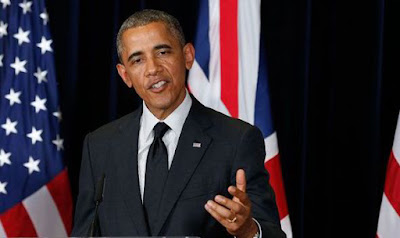
On Tuesday, 4th August of 2015 a conversation was held with the president Barak Obama at the White House for a Demo Day where the entrepreneur from Atlanta, Ga., Jewel Burks had the most precious chance of conversing regarding her initiative of Partpic.

OBAMA BACKED REPLACEMENT PART RECOGNITION APPLICATION

Jewel Burks along with the co-founder Jason Crain explained the ways they came up with the idea of launching Partpic which is an application developed for the purpose of helping companies recognize and order the exact replacement part for getting back their machines’ functionality.

From her experience of working in a parts call center and her childhood occurrence of helping her grandfather into getting a replacement part for his tractor helped her to turn up with the idea of this company. Her desire to help people out in searching for the part needed for their machines is what that drives her into this endeavour.

What was most inspiring for Burks, the President showed genuine interest in understanding the comprehensive details of the company. At the Demo Day, Burks’s company was one of the 30 start-ups and 90 entrepreneurs who were all invited to take a role in the initiative taken on the part of the administrative that will encourage many to include in the tech industry.

Obama cited that if the companies on a global scale continue to put stress in employing diverse leadership, there will create more scope for opportunity. The lack of participation is possibly the reason that the companies are not doing good. In this occasion Obama had been more particular in mentioning that women CEOs are employed in less than 3% venture capital-backed companies, at the same time, less than 1% companies have an African American as their founder.

The president announced that miscellany initiatives will be taking place with new public-private tech firms along with more than 40 leading venture capital firms for the purpose of increasing varied practices for hiring and funding. The co-founder of The Electronic Frontier Foundation and his wife Freada Kapor have committed a $40 million investment for the development in the tech sector.

Adding to the success of Obama’s administration, over 100 engineering schools have pledged to TechHire initiative that will focus on diversity hiring and more comprehensive student enrolment. 

 Related News