Showing posts with label free electronics video. Show all posts

Monday, 8 February 2016

The latest Developments in Smart Electronics

In all the latest news sections, it is probably only the electronic news section provides that readers with good news every day. Not too sound overly pessimistic here, but that is the general trend these days with an amazing cool new gadget coming out into the markets tempting buyers to loosen their pockets every day.

Here is what is new in the electronics market right now, grab them as soon as you can before they are replaced by upgraded models like tomorrow.

https://in.pinterest.com/electrodiction/

Flick out your latest smart phone from your pocket… but wait where is it?

It seems apparently invisible not because it is wearing Harry Potter’s invisibility cloak, but because it is transparent. Yes, the dream-like sci-fi prospect of owning a transparent phone is now a reality.

A group of scientists from the Korean Advanced Institute of Science and Technology have designed the world’s first transparent computer chip. These brilliant inventors are – Jung Won Seo, Keong Su Lim, Jae-woo Park, Sang Jung Kang and Ji-Hwan Yang. This new chip is known as TRRAM i.e. Transparent Resistive Random Access Memory. These chips are almost alike to those of the existing chips known as CMOS; these are special kinds of metal oxide semi-conductors that are used as a memory device in modern electronics.

The only difference in this chipset is that it is completely transparent. But then why make a chipset transparent just because it has been a childish dream driven by animated TV series and movies and science-fiction novels?

Well having a transparent device can have several benefits, other it just seeming cool, like for instance security perks. This is a milestone achievement in the world of transparent electronics, as revealed by one of the scientist Jung Won Seo. He further added that by incorporating this TRRAM chip into other transparent components can create a completely transparent embedded electronic system. With this amazingly fresh new invention who knows how far we are from, from using the mirrors as computer screens and television sets at our homes.

As per the reports this technology will be available to in the market within 3 to 4 years.

Now you can record information using a digital pen that can be taken into your computer for editing, viewing or for word processing different word documents. This is truly the digital age where we no longer have to use the old-school pen and paper and can do wonders for our environment and further drive the process of going green.

Related News


Monday, 18 January 2016

Flexible Transistors Lead an Electronics Revolution

FlexEnable, a transistor developer in the UK recently stated that the automotive industry is one of the places where flexible displays are gaining ground.

The firm which is based in Cambridge, is in the process of completing quite a few number of projects for the automotive industry after coming in contact with the interested parties in the 2015 edition of International Motor Show held at Germany in the month of September.


It has forged a partnership with the firm Flextronics which designs and manufactures electronics. FlexEnable has tied up with several Tier 1 suppliers of solutions in the industry of automotives.

Flexible electronics are being planned to be integrated with automobiles in the following ways:

  • They are considering putting in place a display on either side of the windshield, commonly referred to as the “A pillar”, which serves to eliminate the problem of the blind spot. So, naturally it has to be curved.
  • Other uses of flexible electronics in the world of automobiles involve putting in place a passenger display at the back of the headrest so that it is safer and does not add to the weight that much.

The Market for Flexible Displays

Earlier, in the initial parts of 2015, the company made a demonstration of an organic LCD, abbreviated as (O)LCD in the A pillar . It has already entered into several NDAs with firms in this particular area relevant to developments of commercial nature.

The consultancy IHS Automotive, predicts vehicle sales provided with such touchscreen interfaces will gain ground from 16.7 million pieces in 2015 to more than 61 million pieces in the year 2021.

In addition to the displays, automotive parts present several opportunities potentially, in the area of flexible and printed electronics in applications related to sensors and lighting. Among the large number of companies, including the automotive giant BMW,plan to integrate electronic lighting that is organic in nature as one of the constituent parts of their vehicles.

Flexible Transistors
FlexEnable is a provider of the flexible transistor, a technology platform which may be fused with LCD or OLED displays in addition to sensors of various sorts and other components of electronics. Aside from automotives other uses might be in fields like medical imaging, consumer and security electronics regarding applications.

There are numerous places where there is need of an active surface like x-ray imaging, sensors of biometric nature like sensors regarding veins, fingerprints or pressure to consumer electronics displays and also advertising and signage.

There are plans by the company to licence the relevant technology to partners in the supply chain and open up a manufacturing unit in Asia in the later parts of 2016.
By 2018 the company aspires to be able to produce such electronic units in very high volumes in the year 2018.

Electrodiction

If you are an amateur hobbyist or a professional looking to switch career paths, electronics training as imparted through electronics video like those provided by Electrodiction may prove to be of invaluable help.

Related News


Tuesday, 29 December 2015

Understanding how microprocessors work

Did you know that you are using microprocessors right now to view this very blog? Yes, the computer or smart phone device you are using to view this blog uses microprocessors as the very heart of the system. Today all automated machines whether servers, desktops or laptops all use microprocessors. If you are a gadget savvy person, you may have some idea of different microprocessors available in the markets currently like for instance, K6, Pentium, Sparc, PowerPC etc. While these are only different names for same device – all microprocessors perform similar functions.


While this big name ‘microprocessor’ might seem somewhat foreign; but you may be aware of the other name for it, CPU or Central Processing Unit. A CPU is basically a whole computation mechanism that is built on a single chip. The first microchip was introduced in 1971 and was called Intel 4004. Although it was not very powerful; but it could add and subtract only 4 bits at a time. But what was truly amazing about the device was that it was built with only one chip. Before the inception of Intel 4004, computers were built with collections of chips or isolated electronic components. Hence, something so nano-scale was truly inspiring for the entire electronic community. Although the 4004 powered computer was not really a full-fledges computer in comparison to the modern day devices. It was more like a new calculator that was portable.

To an average Joe how a computer works, may only be a wondrous imagination. But for those interested in digital electronics will find it interesting that all the amazing functions a computer does is base on simple digital logic, made to happen by design. Everything you do on a computer, from playing games, to listening to songs to spell-checking a document is controlled by a microprocessor.

The first microprocessor to have been installed in a home PC was the Intel 8080. It was a complete 8 bit computer contained in a single chip and was launched into the markets on 1974. But the real deal that made a huge splash in the whiz world was the Intel 8088 which was introduced in 1979 and included into the IMB PC that was launched on 1982.

The history of PC market goes on to move further ahead from 8080 to 80286 to 80386 to the Pentium processor, then Pentium II to Pentium III and then to Pentium 4. All these models were designed by Intel and are simply improvements made on the first 8080 model. The Pentium 4 can run any code that the 8080 could but only faster. 5000 times faster to be precise.

To learn more about digital electronics there are several online electronics training courses and other platforms where you can watch interesting electronics videos to expand your knowledge in electronics.

Related News


Sunday, 20 December 2015

The pros and cons of video learning

The benefits of using educational technology and implementing video learning are numerous, but they also come with a few disadvantages. In today’s world most teachers are required to learn using educational technologies and to implement video tutorials in their lessons. In this blog we will go through both these aspects.

The pros and cons of video learning

My experience with educational technology in class:


The first time I used educational technology was in my first formal teaching assignment at college level. I still remember the day clearly; I was excited to use the most state-of-the-art technologies to teach an engaging topic to my class. The total strength of students were 23 and I was keen to get everything setup on time. So I walked to my class 5 minutes before the time of class, and a student waked beside me. He did not know I was the new teacher and casually said something that made my heart drop into my stomach and forced a cold sweat along my spine. “Did you hear? The internet is going to be down in this building today”, he had said. 

I’m sure many of you have had an experience with technology gone that is worth sharing. It is evident that when technology works well, it helps students to learn efficiently. But when there is a technical fault, it just creates utter chaos. The last time I tried setting up my router on my own, I asked my neighbor’s son (somewhat of those new-age whiz kids) to help me out. We ended up wasting our whole morning and afternoon trying to solve a tiny glitch that just seemed too stubborn to do away with. At the end of the day we had no new ideas except the one with restarting the whole system, including the PC. And voila! It worked.

So in my opinion, it is true that integrating technology with new computerized smart devices into academics can offer great benefits. But before doing so, it is necessary to train the teachers to be equipped to handle them. This will also help with schools good name as teachers will be able to answer unexpected questions from the students and parents and address technical issues with ease.


Pros of educational technologies in learning for students:


Are you a student of a difficult engineering subject? Having a tough time understanding circuit theory? You must have come across several platforms offering easy to understand electronics video tutorials on the internet. And I bet they helped solve your confusions. So why not use in class as well?

  • They help students be prepared for the future
  • Increase their motivation and engagement in class
  • Offers a wider access area with inspiring collaboration
  • Keeps them updated
Related News


Monday, 24 August 2015

Study Says Saturn and Jupiter were Small as Pebbles

There have been many studies and researches around the mystery of emergence of gas giants such as Saturn and Jupiter. According to a recent study, the researchers are finally successful in deciphering the mystery and have found this - Saturn and Jupiter possibly have been started forming before 4.5 billion years generated from the small pebbles measuring to centimetre emerging from dust and ice spinning around the newborn Sun. 

Study Says Saturn and Jupiter were Small as Pebbles

By swiftly melding into the nuclei, the primeval pebbles had turned into Jupiter, Saturn and other gas giants. According to the previous researches, a splendid cluster of much-bigger chunks is required for constructing a giant planet, with the distance of a kilometre between each chunk.

However, for the scientists it was difficult to find any explanation regarding the plausibility of the completion of this process of turning the pebbles into gas giants in only some millions of years; even before dispersion of the disk of dust around the Sun.

According to a report by ‘Nature’ in 2012 Michiel Lambrechts and Anders Johansen of Lund University in Swedens were successful in solving this notion of pebble-accumulation. According to their study a substantial explanation was able to find out about how a terrestrial core could form that fast, whilst abrasion between gas and the disk would have slowed down the process of accumulation of the pebbles into a sprouting planet.

The theory drawn by Michiel Lambrechts and Anders Johansen showed that through simulations it is possible to create hundreds of substances similar to that of the Earth, flying around the Sun. This theory has abolished the idea of ten times larger objects than the size of Earth and few in amount which previously have been thought to be the nuclei formation of the giant planets.

Another planetary scientist, Harold Levison of Southwest Research Institute in Boulder has declared that there are simulations possible for allowing more time to growing planetesimals to intermingle and smash with each other. Depending on the primary conditions, the simulations of this research team have usually occurred between one and four of the gas giant planets, like Jupiter, Saturn, Uranus and Neptune.

Monday, 10 August 2015

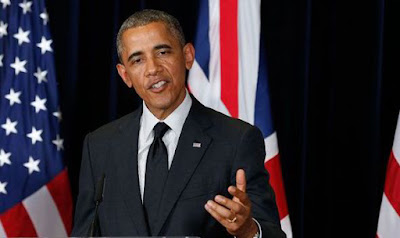
OBAMA BACKED REPLACEMENT PART RECOGNITION APPLICATION

On Tuesday, 4th August of 2015 a conversation was held with the president Barak Obama at the White House for a Demo Day where the entrepreneur from Atlanta, Ga., Jewel Burks had the most precious chance of conversing regarding her initiative of Partpic.

OBAMA BACKED REPLACEMENT PART RECOGNITION APPLICATION

Jewel Burks along with the co-founder Jason Crain explained the ways they came up with the idea of launching Partpic which is an application developed for the purpose of helping companies recognize and order the exact replacement part for getting back their machines’ functionality.

From her experience of working in a parts call center and her childhood occurrence of helping her grandfather into getting a replacement part for his tractor helped her to turn up with the idea of this company. Her desire to help people out in searching for the part needed for their machines is what that drives her into this endeavour.

What was most inspiring for Burks, the President showed genuine interest in understanding the comprehensive details of the company. At the Demo Day, Burks’s company was one of the 30 start-ups and 90 entrepreneurs who were all invited to take a role in the initiative taken on the part of the administrative that will encourage many to include in the tech industry.

Obama cited that if the companies on a global scale continue to put stress in employing diverse leadership, there will create more scope for opportunity. The lack of participation is possibly the reason that the companies are not doing good. In this occasion Obama had been more particular in mentioning that women CEOs are employed in less than 3% venture capital-backed companies, at the same time, less than 1% companies have an African American as their founder.

The president announced that miscellany initiatives will be taking place with new public-private tech firms along with more than 40 leading venture capital firms for the purpose of increasing varied practices for hiring and funding. The co-founder of The Electronic Frontier Foundation and his wife Freada Kapor have committed a $40 million investment for the development in the tech sector.

Adding to the success of Obama’s administration, over 100 engineering schools have pledged to TechHire initiative that will focus on diversity hiring and more comprehensive student enrolment. 

 Related News

Wednesday, 18 February 2015

Volta Turns 270—the Man who said No to Priesthood and Yes to Electricity -2015


It’s February 18, Alassandro Volta’s birthday! You probably already got an air of who he was when you saw the doodle on Google—the Italian physicist and battery-inventor.  But, for electronics science aficionados, he is a legend who bravely fought against the adversities of his time.
The man’s story goes long before “voltaic pile”—the first original battery and ‘Volts’ the unit of electric current to credit his name. Even before the discovery of methane gas and al that hullaballoo over electrostatics, pneumatics and meteorology. In 1745, Volta was born in the beautiful town of North Italy, Como. Volta had a noble family background.


  • A Hidden Diamond

Alessandro Volta was thought to be slow-witted and dull in the primal phase of his life. But, the diamond didn’t stay hidden for long, as his father recognised later as Volta began to shine in class. His sudden improvement   left everyone amazed. However, his parents insisted that he should take up priesthood which he kept resisting. 

The man had burning interest in something else! At the age of 18, Volta had the guts to exchange letters on Electricity with two hugely popular physicists of his time: Giambatista Beccaria and Jean-Antoine Nollet.

  • Controversy over Frog’s Leg Led to Invention of Battery! 

Alessandro Volta never aspired to invent battery in the beginning. It was his dispute with Galvani that compelled him to explore further on the matter. Galvani was an Anatomy professor. He noticed that contact with different metals make a frog’s leg ‘twitch’ which he referred to as “animal electricity”.  
Alessandro Volta studied Luigi Galvani’s theory and felt something was wrong with it. He ran multiple experiments on this and finally something struck him like a lightening. Two different metals are causing the twitch but similar metal causes no movement in the dead muscle at all. 


Then Alessandro Volta came to know that not only two different metals generate electrical effect, but such metals, when in contact with particular types of fluid create such effect.  Born was the first electric battery from this experiment in 1800. 

Now we understand what Galvani did was to create an electric cell unknowingly.  The frog’s leg acted like an electrolyte that fuelled the flow of electricity. Browse through free electronics video tutorial to dig fun projects as such.