Showing posts with label learn electronics. Show all posts

Monday, 18 January 2016

Flexible Transistors Lead an Electronics Revolution

FlexEnable, a transistor developer in the UK recently stated that the automotive industry is one of the places where flexible displays are gaining ground.

The firm which is based in Cambridge, is in the process of completing quite a few number of projects for the automotive industry after coming in contact with the interested parties in the 2015 edition of International Motor Show held at Germany in the month of September.


It has forged a partnership with the firm Flextronics which designs and manufactures electronics. FlexEnable has tied up with several Tier 1 suppliers of solutions in the industry of automotives.

Flexible electronics are being planned to be integrated with automobiles in the following ways:

  • They are considering putting in place a display on either side of the windshield, commonly referred to as the “A pillar”, which serves to eliminate the problem of the blind spot. So, naturally it has to be curved.
  • Other uses of flexible electronics in the world of automobiles involve putting in place a passenger display at the back of the headrest so that it is safer and does not add to the weight that much.

The Market for Flexible Displays

Earlier, in the initial parts of 2015, the company made a demonstration of an organic LCD, abbreviated as (O)LCD in the A pillar . It has already entered into several NDAs with firms in this particular area relevant to developments of commercial nature.

The consultancy IHS Automotive, predicts vehicle sales provided with such touchscreen interfaces will gain ground from 16.7 million pieces in 2015 to more than 61 million pieces in the year 2021.

In addition to the displays, automotive parts present several opportunities potentially, in the area of flexible and printed electronics in applications related to sensors and lighting. Among the large number of companies, including the automotive giant BMW,plan to integrate electronic lighting that is organic in nature as one of the constituent parts of their vehicles.

Flexible Transistors
FlexEnable is a provider of the flexible transistor, a technology platform which may be fused with LCD or OLED displays in addition to sensors of various sorts and other components of electronics. Aside from automotives other uses might be in fields like medical imaging, consumer and security electronics regarding applications.

There are numerous places where there is need of an active surface like x-ray imaging, sensors of biometric nature like sensors regarding veins, fingerprints or pressure to consumer electronics displays and also advertising and signage.

There are plans by the company to licence the relevant technology to partners in the supply chain and open up a manufacturing unit in Asia in the later parts of 2016.
By 2018 the company aspires to be able to produce such electronic units in very high volumes in the year 2018.

Electrodiction

If you are an amateur hobbyist or a professional looking to switch career paths, electronics training as imparted through electronics video like those provided by Electrodiction may prove to be of invaluable help.

Related News


Tuesday, 17 November 2015

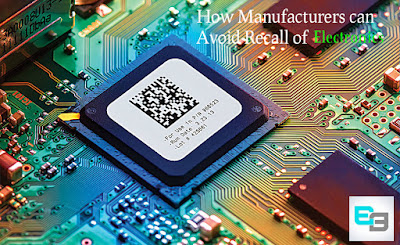
How Manufacturers can Avoid Recall of Electronics

The ability to trace components of electronic instruments has assumed more significance than ever before and the trend is all set to continue. The end in mind is to curtail costs and liability due to recall and counter diversion and counterfeiting while continuing to maintain the brand’s integrity. This can be achieved by efficiently and effectively putting into use what is termed as data marking tech while manufacturing electronic components.

free electronics videos

Traceability Remains a Growing Need

When warranty claims related to recalls and defects are made, in ideal conditions the manufacturer would be to identify the origins of the parts to the specific process or machine. This may be attained through judicious and proper use of hardware and software. The task of the software in this particular matter is to come up with codes that are traceable whereas the hardware like cameras and printers are able to produce and authenticate the code involved.

An Upcoming Threat

The industry dealing with electronics is being challenged increasingly with electronics components that are actually counterfeits. In a recent article, the “Semiconductor Industry Association” revealed that electronic components counterfeiting costs the semiconductor industry by as much as $7.5 billion every year in terms of the loss in revenue. The unique coding method when applied on components and parts is exactly what the industry needed to provide necessary protection.

How to Put in Place a Traceability System

With the evolution of technology manufactures face the considerable hurdle on marking unique codes on components that are getting smaller by the day. In the absence of any single particular standard, some of the manufacturers are often required to mark specific codes by customers down in the buying stream.

The conundrum facing manufacturers of electronic components is how to implement a system of traceability that meets their unique and individual needs amidst a scenario of coding demand that is highly challenging.

The Options

Two marking and printing technologies exist that are well suited to meet such coding demands:


  • Laser marking systems
  • Continuous inkjet printers
Endwords

The latest breed of CIJ and laser printers may easily print in outstanding resolutions and prints of high durability and print in small spaces generate all sorts of complex codes; providing a solution to the problem of implementing traceability systems. online electronics training will get you all the know how needed to understand the basics of electronics and comprehend the issues dealt with in this post all the more.

Related News


Tuesday, 6 October 2015

Top 5 Technologies for Sustainable Development

In the present years, during the advent of Electronics training, the exact technologies to make improvement sustainable are accessible. In this connection the major challenge is to make connections between the general population with the thoughts, those taking a shot at the ground with the local information on how it may function and the investors to support them.

 Top 5 Technologies for Sustainable Development

Here, I am going to incorporate some inventive, fresh technologies which are the leaps forward in pushing new limits.

Algae Biofuels

12% of flight fuel could originate from green growth by 2030, if monetary reductions don’t mediate. In 2009, the primary green growth fuelled car was put out and about. Green growth fuel, a fluid seeming to be like vegetable oil, discharges the carbon’s fifth outflows of fossil fuels and could be prepared in proficient seaside lakes.

Zinc-air Batteries

With world assets of zinc being 100 times more ample than lithium particle, a shift to zinc-air batteries can possibly make computers more versatile, electric automobile more reasonable and portable amplifiers more solid. Zinc is ecological, moderately cheap and great source of energy.

Natural Solar Cells

As per UK’s Carbon Trust, inexpensive natural sunlight based cells can be made sufficiently effective to prevail business achievement. But, expectations have been disillusioned repetitively as makers are yet to get above 9% change from light to power. However, in the event that leaps forward happen, a considerable lot of us will begin wearing sun based apparel, conveying sun powered umbrellas and utilizing versatile sunlight based chargers.

Sea Energy

The US, UK, Norway and Canada are in front for creating tidal energy and ocean wave assets, however, expenses are still generally twofold what is financially suitable. A scope of development is being produced, especially in the more progressed and less exorbitant region of tidal forces. The Carbon Trust appraises that 20% of UK power needs could be met by the ocean from the 2020s.

Smart Lighting

Smart lighting is an affluent range of technology with several little associations, growing better approaches to supply poor nations with sun oriented lamps, or, on the flip side of the range, to give inhabitance sensors and sunlight delicate schemes for industrial units. Lights that monitor biochemical perils or which can give web access are in the pipeline.

Presently, it is vital that we move this talk without hesitation and start to allocate the basic technologies that will enhance lives far and wide.

 Related News


Wednesday, 30 September 2015

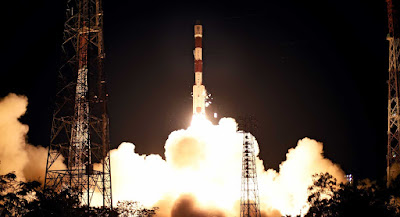
Isro Launched First Satellite Astrosat

Isro, on Monday, effectively propelled first astronomy satellite of India, Astrosat - after 11 years the legislature cleared the task. 

Isro Launched Its First Astronomy Satellite Astrosat

At 10am, Astrosat, conveyed by a Polar Satellite Launch Vehicle (PSLV-C30) and six different satellites detonated from the Satish Dhawan Space Center in Sriharikota.

After liftoff, in around 25 minutes, PSLV-C30 infused Astrosat and different satellites, which include four nanosatellites of the US, an Indonesian microsatellite and a Canadian nanosatellite - into their separate courses. For the first time India is propelling a US satellite.

644.651km from earth Astrosat was put on a course, as wanted. The satellite accomplished a normal slant of 6.002 degrees.

P Kunhikrishnan, the director of Satish Dhawan Space Center, said after the dispatch, that the mission is fruitful. It is an all around perceived and synchronous endeavor. For him it was a well deserved blessing.

About Astrosat:

Astrosat, having a takeoff accumulation of 1,513kg, now will set out on a five-year cosmic operation concentrating on inaccessible divine articles.

It will monitor the universe in the bright, ocular, high and low energy x-beam areas of the electromagnetic range, contrasted with nearly all other exploratory satellites that are fit for watching a wavelength band’s restricted scope.

In the middle of its assignments, Astrosat’s 5 payloads will learn black-holes and star conception locales.

The website of ISRO records out the observatory’s target - to see high vitality forms in twofold star frameworks containing black-holes and neutron stars; to gauge magnetic grounds of neutron stars; to read star conception areas and lofty energy forms in star frameworks lying past the galaxy; to identify new sources for temporarily brilliant x-beam in the sky and finally to execute constrained profound ground-overview of the ultraviolet locale of the universe.


Astrosat, conveying 5 payloads, is equipped for watching the sky in the perceptible, close UV and far UV areas of the electromagnetic range.

There are two telescopes on the Ultraviolet Imaging Telescope (UVIT) payload, which are intended to accomplish a magnificent picture determination, whereas the other 4 payloads have their particular parts.

Alternate payloads are – Soft x-beam Telescope (SXT), Large X-Ray Proportional Counter (LAXPC), Charge Particle Monitor (CPM) and Cadmium Zinc Telluride Imager (CZTI).

On next Monday, the payloads will begin taking a shot, on the eighth day after dispatch.

 Related News

http://www.techtimes.com/articles/54828/20150522/scientists-develop-light-emitting-paper-that-might-shape-future-of-bendable-electronics.htm