Showing posts with label video lectures on electronics. Show all posts

Monday, 21 March 2016

A human-sized drone, EHang 184:

The latest from CES, 2016

The Chinese company UAV came up with the latest phenomena to capture the skies with their latest human-sized drone perfect for a single person ride. The CES (consumer electronics show, 2016) had several electronic revelations enough to tempt even the best of electronic gadget-haters (if that breed exists). But the best out of all the devices that were shown on the first day of CES, 2016 was the human-size drone called EHang 184.


While this might sound like in the movie "Honey I shrunk the kids" only this time with you to ride drone being shrunk to a size of a Lego to fit inside a DJI machine. But that is not the case. You can fit into this drone without needing to be shrunk. This giant flying machine capable of turning all those boyhood dreams of flying into reality was sitting smack in the middle of the CES, 2016 drone section.

The company EHang was founded in the year 2014, and raised about USD 50 million in venture funding up to this date. Their view on this humungous drone is that this is the future of personal transport and most people were awestruck to find such epic possibilities and did not think of questioning the idea twice.

But many experts believe that this was just another smart marketing strategy for the company EHang to market their latest regular sized drones, like the Ghost. While we do not wish to dampen your expectations of buying this drone from Best Buy this year, but it is highly unlikely that this product will be available to be used as ones personal transport anytime soon.

While most of the employees of the company were not aware of the technical specifications of the drone and could not really answer about the MSRP on the release date of the device, but a press kit of the device did provide the reviewers with some insight on the drone specifications:
  • The drone is about 4 and half feet tall
  • It weighs around 440 pounds 
  • It will be capable of carrying 1 person for a ride for 23 minute
  • The maximum speed that can be reached by the drone is 60 MPH
  • The arms of the drone folds upwards
  • It is fitted with gull-wing doors  that add to super chic style of the drone

The best part about this drone will be the fact that it is designed to be totally automated. Hence, a rider would simply have to enter their destination and sit back and enjoy the ride without any form of control mid-flight. Thus, this will be helpful in adding to the safety of the device by eliminating the most dangerous part of accidents that occur with ordinary modes of personal transportation, i.e. human error. But this system also has a downside as the passengers will be completely helpless if anything should go wrong mid-flight. However, the company has assured the people that their company will employ numerous fail-safes to ensure complete safety during flights on the drone. There are features like multiple backups for every flight system and an option of allowing the airplane to land immediately if the passenger’s life is in danger.

In final thoughts, a bad news for fellow drone enthusiasts is the fact that there are still a few years to go before we can see this EHang 184 flying in the sky even if in a demo video. However, it is inspiring to see that a company is putting real thought into the future of the drone sector and producing awe-inspiring technology that can redefine our mundane daily commute to work in the distant future.

For latest news and electronic tutorials visit our website at Electodiction. We will make sure you get your daily dose of electronic info as we plan to keep you addicted to the digital world.

Related News


Monday, 18 January 2016

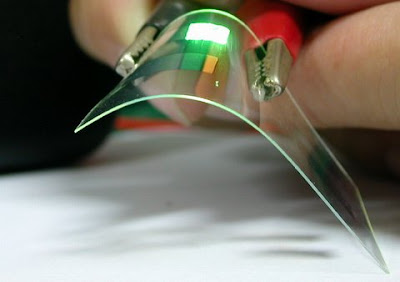
Flexible Transistors Lead an Electronics Revolution

FlexEnable, a transistor developer in the UK recently stated that the automotive industry is one of the places where flexible displays are gaining ground.

The firm which is based in Cambridge, is in the process of completing quite a few number of projects for the automotive industry after coming in contact with the interested parties in the 2015 edition of International Motor Show held at Germany in the month of September.


It has forged a partnership with the firm Flextronics which designs and manufactures electronics. FlexEnable has tied up with several Tier 1 suppliers of solutions in the industry of automotives.

Flexible electronics are being planned to be integrated with automobiles in the following ways:

  • They are considering putting in place a display on either side of the windshield, commonly referred to as the “A pillar”, which serves to eliminate the problem of the blind spot. So, naturally it has to be curved.
  • Other uses of flexible electronics in the world of automobiles involve putting in place a passenger display at the back of the headrest so that it is safer and does not add to the weight that much.

The Market for Flexible Displays

Earlier, in the initial parts of 2015, the company made a demonstration of an organic LCD, abbreviated as (O)LCD in the A pillar . It has already entered into several NDAs with firms in this particular area relevant to developments of commercial nature.

The consultancy IHS Automotive, predicts vehicle sales provided with such touchscreen interfaces will gain ground from 16.7 million pieces in 2015 to more than 61 million pieces in the year 2021.

In addition to the displays, automotive parts present several opportunities potentially, in the area of flexible and printed electronics in applications related to sensors and lighting. Among the large number of companies, including the automotive giant BMW,plan to integrate electronic lighting that is organic in nature as one of the constituent parts of their vehicles.

Flexible Transistors
FlexEnable is a provider of the flexible transistor, a technology platform which may be fused with LCD or OLED displays in addition to sensors of various sorts and other components of electronics. Aside from automotives other uses might be in fields like medical imaging, consumer and security electronics regarding applications.

There are numerous places where there is need of an active surface like x-ray imaging, sensors of biometric nature like sensors regarding veins, fingerprints or pressure to consumer electronics displays and also advertising and signage.

There are plans by the company to licence the relevant technology to partners in the supply chain and open up a manufacturing unit in Asia in the later parts of 2016.
By 2018 the company aspires to be able to produce such electronic units in very high volumes in the year 2018.

Electrodiction

If you are an amateur hobbyist or a professional looking to switch career paths, electronics training as imparted through electronics video like those provided by Electrodiction may prove to be of invaluable help.

Related News


Friday, 7 August 2015

Flexible Paper can Emit Light

Since the first emergence of technology, the evolution never stopped.And now in the present age of rapid advancement of smart gadgets another extraordinary collection has been added into the list of smartproducts – the firstever light-emitting, transparent and flexible paper. 

 Bendable Technology with Light-emitting Flexible Paper


The evolution of smart technology added many gems into its list – from phones to tablets and then watches and glasses. However, these inventions could not eradicate the barrier of rigidity. Now the Researchers from China have reported that they have developed light-emitting, transparent and flexible paper – a technology that takes one step ahead to the revolution of bendable electronics.

This transparent, flexible and light-emittingpaper is reported to be environmentfriendly that has been made out of similar eco-friendly materials using a simple anda greater rate of filtration technique.

It has been long predicted by the technology experts that the age of flexible electronicsis coming, and researchers are working diligently on severalfacades to find a way towards that goal. Sincemost of the progressesdepend on petroleum-based plastics and toxic materials, Yu-Zhong Wang, Fei Song and their colleagues in China wanted a solution in a “greener” way.

In this endeavor, Yu-Zhong Wang and Fei Songled a team of researchers who were material scientists at Sichuan University, China. About the research and the outcome have beenissuedin the American Chemical Society's journal Applied Materials and Interfacesthis week.


What thescientists wrote in their new paper is pretty inspiring, "This material can bring a new thinking on future electronic displays and 3D printing papers". The paper that the researchers developed is a thin, clear nanocellulose paper prepared out of wood flour and later suffused it with biocompatible quantum dots. These arelittle, semiconducting crystals which are made combining zinc and selenium. What is interesting is that this paper glows at room heat and can easily be rolled and unrolled without the fear of cracking it.

 Related News

http://www.techtimes.com/articles/54828/20150522/scientists-develop-light-emitting-paper-that-might-shape-future-of-bendable-electronics.htm

Wednesday, 5 August 2015

In Collaboration with Micron Intel Launched 3D XPoint Memories

On the 28th of July, 2015 in London, the company executives of the Intel and Micron Technology launched the first category of memory that is described by both the companies as a major development after 1989 when the NAND flash was first emerged. It is the 3D XPoint memory IC with 128Gbits capacity which according to a primary finding is a fixed memory that reveals a massive capacity for material property change where the metal access lines meet at a cross-point.

What you need to know about vaping hazards of E-Cigarettes


The buzz is already around the electronics industry that this memory may possibly bring a major revolution. It is hoped that this memory will be faster up to 1000 times than NAND flash. Also the density of the memory is 8 to 10 times more than DRAM, making the cost relatively low. The applications of 3D XPoint memory are predicted to be lucrative for the data centers and the solid-state drives.

According to the CEO of Micron Mark Durcan that this is the result of the joint venture between Intel and Micron built in 2006. It was being produced at the wafer fab in Lehi, Utah, which belongs to IM Flash Technologies LLC. The Micron CEO further enforces that the memory is structured in a way that it will remain as two planes of 64Gbits where one bit will be quantified for each cell.

The engineering details were disclosed at the launch event as well. According to the Intel and Micron while creating the 3D XPoint memory they were stressing on inventing material compounds that will be unique in nature. They did not disclose much about the switching mechanism but hinted that it is by means of modifications done in resistance of the bulk material.


There are similarities of 3D XPoint to ReRAMs developed by Crossbar Inc. as it is a resistive RAM with a select integral diode making an opaque structured device. But it has been confirmed that 3D XPoint cannot be pertained and comparing to other forms of stable memory, the 3D Xpoint is fundamentally a special switch made for bulk-switching mechanism. 


Related News

http://www.c-sharpcorner.com/News/4965/intel-and-micron-collaborate-to-launch-3d-xpoint-technology.aspx

Monday, 22 September 2014

Binary operations and Logic gates

Electronics with its wide appeal has always interested academicians and people otherwise who want to learn the various aspects of the subject. The fascination of new gadgets and devices based on certain principles which change the way of human lives has always enticed both electronics hobbyists and professional experts.

https://www.flickr.com/photos/electrodiction/

        A new and innovative approach to learning the subject is the usage of audio visual tutorials which go through all the details of a particular subject in a serialised manner, thereby guiding the students through a detailed process. There are several of these video tutorials available online which provide students with knowledge regarding electronics. However, if one plans to take help from these online sources, a few things should be kept in mind before using their services.

           The basic building blocks of digital logic are what Basic Digital electronics deal with. Logic gates are used by almost all digital chips such as the 8 bit AVR to all quad core processors. The AND, OR, NOR, NAND are all these logic gate structures and what is important is to learn what can be derived from them.

Related Video


                         Every Logic gate is represented by its symbols and has its own truth table and each of these gates have inputs and they in turn produce outputs that are in the numerical form of either 0 or 1. Logical operations are very easy because of the binary bits. Logical operations are based on two binary bits being compared and producing a third binary bit as its result. 


        Audio Visual electronic tutorials are an immense help in understanding concepts regarding any branch of Electronics. These videos are put up by professional experts who identify the difficulties students might face while studying the subject and accordingly flesh out the chapters through videos.

         Students need to properly choose the videos they think will help them in understanding the core concepts and if they can subscribe to one of these channels and get access to all the videos, it will help them in many ways.

Tuesday, 22 July 2014

3 Things To Know Before Following Electronics Video Tutorial - 2014

As a student, it is always difficult to find a reliable source of information over a particular subject on the internet. With subject like Electronics the scope gets relatively narrowed as there is hardly any online tutorial that looks forward to explain the involved topics with a practical demonstration. In such context, when students find any random electronics video tutorial they quickly jump on to it.

However, with necessary research one can find some exclusive links that offers highly engaging video tutorials on electronics. The experience can be enhanced with guidance on the basis of the upcoming points serves useful:
Become Member


 1) Author of the video: The first thing that you need to check is the author of the video. Tutorials that are made by experts are accurate in nature. Though usually chargeable, these videos have complete range of discussions along with an in-depth analysis that is practically demonstrated on the screen to promote transparency in understanding. Additionally, these experts also offer a free channel that can be used for communicating and clearing the existing doubts of the students.

 2) Availability of a series: It is always suggested to select those videos that come in a series. If you find certain videos that discuss about only one or two topics, then it can be regarded that they are ineffective towards providing a complete picture of a subject.

 3) Cost, is any: Since most of the electronics video tutorials are prepared by experts, they prefer issuing them on subscription basis. The revenue generated from such subscription serves as an acknowledgement of the author’s effort and hence, a perfect sync operates between the services providers and client.

Additionally, these experts take guarantee of their tutorials and can be held liable if they are wrong. This gives the students a 100% confidence while relying on these types of sources. Thus, find that before relying on any online electronics video tutorial it is important to verify the source of the video along with its additional offerings.