Tuesday, 6 October 2015

Top 5 Technologies for Sustainable Development

In the present years, during the advent of Electronics training, the exact technologies to make improvement sustainable are accessible. In this connection the major challenge is to make connections between the general population with the thoughts, those taking a shot at the ground with the local information on how it may function and the investors to support them.

 Top 5 Technologies for Sustainable Development

Here, I am going to incorporate some inventive, fresh technologies which are the leaps forward in pushing new limits.

Algae Biofuels

12% of flight fuel could originate from green growth by 2030, if monetary reductions don’t mediate. In 2009, the primary green growth fuelled car was put out and about. Green growth fuel, a fluid seeming to be like vegetable oil, discharges the carbon’s fifth outflows of fossil fuels and could be prepared in proficient seaside lakes.

Zinc-air Batteries

With world assets of zinc being 100 times more ample than lithium particle, a shift to zinc-air batteries can possibly make computers more versatile, electric automobile more reasonable and portable amplifiers more solid. Zinc is ecological, moderately cheap and great source of energy.

Natural Solar Cells

As per UK’s Carbon Trust, inexpensive natural sunlight based cells can be made sufficiently effective to prevail business achievement. But, expectations have been disillusioned repetitively as makers are yet to get above 9% change from light to power. However, in the event that leaps forward happen, a considerable lot of us will begin wearing sun based apparel, conveying sun powered umbrellas and utilizing versatile sunlight based chargers.

Sea Energy

The US, UK, Norway and Canada are in front for creating tidal energy and ocean wave assets, however, expenses are still generally twofold what is financially suitable. A scope of development is being produced, especially in the more progressed and less exorbitant region of tidal forces. The Carbon Trust appraises that 20% of UK power needs could be met by the ocean from the 2020s.

Smart Lighting

Smart lighting is an affluent range of technology with several little associations, growing better approaches to supply poor nations with sun oriented lamps, or, on the flip side of the range, to give inhabitance sensors and sunlight delicate schemes for industrial units. Lights that monitor biochemical perils or which can give web access are in the pipeline.

Presently, it is vital that we move this talk without hesitation and start to allocate the basic technologies that will enhance lives far and wide.


 Related News


Wednesday, 30 September 2015

Isro Launched First Satellite Astrosat

Isro, on Monday, effectively propelled first astronomy satellite of India, Astrosat - after 11 years the legislature cleared the task. 

Isro Launched Its First Astronomy Satellite Astrosat

At 10am, Astrosat, conveyed by a Polar Satellite Launch Vehicle (PSLV-C30) and six different satellites detonated from the Satish Dhawan Space Center in Sriharikota.

After liftoff, in around 25 minutes, PSLV-C30 infused Astrosat and different satellites, which include four nanosatellites of the US, an Indonesian microsatellite and a Canadian nanosatellite - into their separate courses. For the first time India is propelling a US satellite.

644.651km from earth Astrosat was put on a course, as wanted. The satellite accomplished a normal slant of 6.002 degrees.

P Kunhikrishnan, the director of Satish Dhawan Space Center, said after the dispatch, that the mission is fruitful. It is an all around perceived and synchronous endeavor. For him it was a well deserved blessing.

About Astrosat:

Astrosat, having a takeoff accumulation of 1,513kg, now will set out on a five-year cosmic operation concentrating on inaccessible divine articles.

It will monitor the universe in the bright, ocular, high and low energy x-beam areas of the electromagnetic range, contrasted with nearly all other exploratory satellites that are fit for watching a wavelength band’s restricted scope.

In the middle of its assignments, Astrosat’s 5 payloads will learn black-holes and star conception locales.

The website of ISRO records out the observatory’s target - to see high vitality forms in twofold star frameworks containing black-holes and neutron stars; to gauge magnetic grounds of neutron stars; to read star conception areas and lofty energy forms in star frameworks lying past the galaxy; to identify new sources for temporarily brilliant x-beam in the sky and finally to execute constrained profound ground-overview of the ultraviolet locale of the universe.


Astrosat, conveying 5 payloads, is equipped for watching the sky in the perceptible, close UV and far UV areas of the electromagnetic range.

There are two telescopes on the Ultraviolet Imaging Telescope (UVIT) payload, which are intended to accomplish a magnificent picture determination, whereas the other 4 payloads have their particular parts.

Alternate payloads are – Soft x-beam Telescope (SXT), Large X-Ray Proportional Counter (LAXPC), Charge Particle Monitor (CPM) and Cadmium Zinc Telluride Imager (CZTI).

On next Monday, the payloads will begin taking a shot, on the eighth day after dispatch.

 Related News

http://www.techtimes.com/articles/54828/20150522/scientists-develop-light-emitting-paper-that-might-shape-future-of-bendable-electronics.htm


Monday, 24 August 2015

Study Says Saturn and Jupiter were Small as Pebbles

There have been many studies and researches around the mystery of emergence of gas giants such as Saturn and Jupiter. According to a recent study, the researchers are finally successful in deciphering the mystery and have found this - Saturn and Jupiter possibly have been started forming before 4.5 billion years generated from the small pebbles measuring to centimetre emerging from dust and ice spinning around the newborn Sun. 

Study Says Saturn and Jupiter were Small as Pebbles

By swiftly melding into the nuclei, the primeval pebbles had turned into Jupiter, Saturn and other gas giants. According to the previous researches, a splendid cluster of much-bigger chunks is required for constructing a giant planet, with the distance of a kilometre between each chunk.

However, for the scientists it was difficult to find any explanation regarding the plausibility of the completion of this process of turning the pebbles into gas giants in only some millions of years; even before dispersion of the disk of dust around the Sun.

According to a report by ‘Nature’ in 2012 Michiel Lambrechts and Anders Johansen of Lund University in Swedens were successful in solving this notion of pebble-accumulation. According to their study a substantial explanation was able to find out about how a terrestrial core could form that fast, whilst abrasion between gas and the disk would have slowed down the process of accumulation of the pebbles into a sprouting planet.

The theory drawn by Michiel Lambrechts and Anders Johansen showed that through simulations it is possible to create hundreds of substances similar to that of the Earth, flying around the Sun. This theory has abolished the idea of ten times larger objects than the size of Earth and few in amount which previously have been thought to be the nuclei formation of the giant planets.

Another planetary scientist, Harold Levison of Southwest Research Institute in Boulder has declared that there are simulations possible for allowing more time to growing planetesimals to intermingle and smash with each other. Depending on the primary conditions, the simulations of this research team have usually occurred between one and four of the gas giant planets, like Jupiter, Saturn, Uranus and Neptune.

Monday, 10 August 2015

OBAMA BACKED REPLACEMENT PART RECOGNITION APPLICATION

On Tuesday, 4th August of 2015 a conversation was held with the president Barak Obama at the White House for a Demo Day where the entrepreneur from Atlanta, Ga., Jewel Burks had the most precious chance of conversing regarding her initiative of Partpic.

OBAMA BACKED REPLACEMENT PART RECOGNITION APPLICATION

Jewel Burks along with the co-founder Jason Crain explained the ways they came up with the idea of launching Partpic which is an application developed for the purpose of helping companies recognize and order the exact replacement part for getting back their machines’ functionality.

From her experience of working in a parts call center and her childhood occurrence of helping her grandfather into getting a replacement part for his tractor helped her to turn up with the idea of this company. Her desire to help people out in searching for the part needed for their machines is what that drives her into this endeavour.

What was most inspiring for Burks, the President showed genuine interest in understanding the comprehensive details of the company. At the Demo Day, Burks’s company was one of the 30 start-ups and 90 entrepreneurs who were all invited to take a role in the initiative taken on the part of the administrative that will encourage many to include in the tech industry.

Obama cited that if the companies on a global scale continue to put stress in employing diverse leadership, there will create more scope for opportunity. The lack of participation is possibly the reason that the companies are not doing good. In this occasion Obama had been more particular in mentioning that women CEOs are employed in less than 3% venture capital-backed companies, at the same time, less than 1% companies have an African American as their founder.

The president announced that miscellany initiatives will be taking place with new public-private tech firms along with more than 40 leading venture capital firms for the purpose of increasing varied practices for hiring and funding. The co-founder of The Electronic Frontier Foundation and his wife Freada Kapor have committed a $40 million investment for the development in the tech sector.

Adding to the success of Obama’s administration, over 100 engineering schools have pledged to TechHire initiative that will focus on diversity hiring and more comprehensive student enrolment. 

 Related News

Friday, 7 August 2015

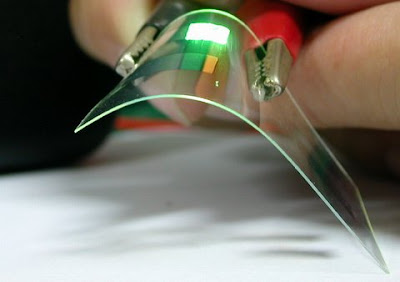
Flexible Paper can Emit Light

Since the first emergence of technology, the evolution never stopped.And now in the present age of rapid advancement of smart gadgets another extraordinary collection has been added into the list of smartproducts – the firstever light-emitting, transparent and flexible paper. 

 Bendable Technology with Light-emitting Flexible Paper


The evolution of smart technology added many gems into its list – from phones to tablets and then watches and glasses. However, these inventions could not eradicate the barrier of rigidity. Now the Researchers from China have reported that they have developed light-emitting, transparent and flexible paper – a technology that takes one step ahead to the revolution of bendable electronics.

This transparent, flexible and light-emittingpaper is reported to be environmentfriendly that has been made out of similar eco-friendly materials using a simple anda greater rate of filtration technique.

It has been long predicted by the technology experts that the age of flexible electronicsis coming, and researchers are working diligently on severalfacades to find a way towards that goal. Sincemost of the progressesdepend on petroleum-based plastics and toxic materials, Yu-Zhong Wang, Fei Song and their colleagues in China wanted a solution in a “greener” way.

In this endeavor, Yu-Zhong Wang and Fei Songled a team of researchers who were material scientists at Sichuan University, China. About the research and the outcome have beenissuedin the American Chemical Society's journal Applied Materials and Interfacesthis week.


What thescientists wrote in their new paper is pretty inspiring, "This material can bring a new thinking on future electronic displays and 3D printing papers". The paper that the researchers developed is a thin, clear nanocellulose paper prepared out of wood flour and later suffused it with biocompatible quantum dots. These arelittle, semiconducting crystals which are made combining zinc and selenium. What is interesting is that this paper glows at room heat and can easily be rolled and unrolled without the fear of cracking it.

 Related News

http://www.techtimes.com/articles/54828/20150522/scientists-develop-light-emitting-paper-that-might-shape-future-of-bendable-electronics.htm

Wednesday, 5 August 2015

In Collaboration with Micron Intel Launched 3D XPoint Memories

On the 28th of July, 2015 in London, the company executives of the Intel and Micron Technology launched the first category of memory that is described by both the companies as a major development after 1989 when the NAND flash was first emerged. It is the 3D XPoint memory IC with 128Gbits capacity which according to a primary finding is a fixed memory that reveals a massive capacity for material property change where the metal access lines meet at a cross-point.

What you need to know about vaping hazards of E-Cigarettes


The buzz is already around the electronics industry that this memory may possibly bring a major revolution. It is hoped that this memory will be faster up to 1000 times than NAND flash. Also the density of the memory is 8 to 10 times more than DRAM, making the cost relatively low. The applications of 3D XPoint memory are predicted to be lucrative for the data centers and the solid-state drives.

According to the CEO of Micron Mark Durcan that this is the result of the joint venture between Intel and Micron built in 2006. It was being produced at the wafer fab in Lehi, Utah, which belongs to IM Flash Technologies LLC. The Micron CEO further enforces that the memory is structured in a way that it will remain as two planes of 64Gbits where one bit will be quantified for each cell.

The engineering details were disclosed at the launch event as well. According to the Intel and Micron while creating the 3D XPoint memory they were stressing on inventing material compounds that will be unique in nature. They did not disclose much about the switching mechanism but hinted that it is by means of modifications done in resistance of the bulk material.


There are similarities of 3D XPoint to ReRAMs developed by Crossbar Inc. as it is a resistive RAM with a select integral diode making an opaque structured device. But it has been confirmed that 3D XPoint cannot be pertained and comparing to other forms of stable memory, the 3D Xpoint is fundamentally a special switch made for bulk-switching mechanism. 


Related News

http://www.c-sharpcorner.com/News/4965/intel-and-micron-collaborate-to-launch-3d-xpoint-technology.aspx